
Technology
To enable transformational science, work is underway to develop innovative, enduring systems and components for the telescope.
Technology Intro
On This Page
Core projects have begun to advance the technology concepts for the Habitable Worlds Observatory (HWO). Teams contributing to these HWO projects will leverage what the astronomical community has learned through the work on ground-based telescopes as well as lessons from the Hubble Space Telescope (HST), the James Webb Space Telescope (JWST), and the Nancy Grace Roman Space Telescope. In some cases, new technologies will be created that have never been flown on a flagship observatory before.
Interested in contributing your expertise or following along? Explore how to get involved.
Coronagraphy
To achieve the exo-Earth imaging and characterization goals of HWO, the observatory requires a coronagraph — a series of specialized optics that remove as much light from the host star as possible while simultaneously preserving the light from faint surrounding planetary companions. These companions are tens of billions of times fainter than the stars they orbit, necessitating starlight suppression factors of ~10-10, or the capability to capture 1 photon of light from the planet for every 10 billion photons of stellar light suppressed by the coronagraph.
To achieve this ambitious goal, in addition to the static coronagraph optics, HWO will need to employ controllable deformable mirrors to sense and remove any remaining starlight in a closed loop system as well as state-of-the-art post-processing algorithms. The HWO coronagraph will build on decades of progress from the ground as well as lessons learned from Hubble, JWST, and Roman’s Coronagraphic Instrument, a technology demonstration that will perform active wavefront sensing and control with a coronagraph in space for the first time.
Ultra-stable Telescopes

Long exposure times (e.g., hundreds of hours) will be needed to detect faint spectral signatures from Earth-like planets to characterize their atmospheres and determine if they could harbor life. This necessitates long-term stability to ensure that these faint signals aren’t overwhelmed by leaked starlight that makes its way into the image as the telescope moves due to subtle changes in temperature, and mechanical motion.
The level of tolerable motion for the whole observatory is on the order of picometers or about 1/50th the size of a hydrogen atom. This extreme level of stability will require new techniques, compared to what was used for previous space observatories, as well as the development of precise metrology systems that are capable of measuring these small deviations to identify and mitigate them before launch.
Instrumentation
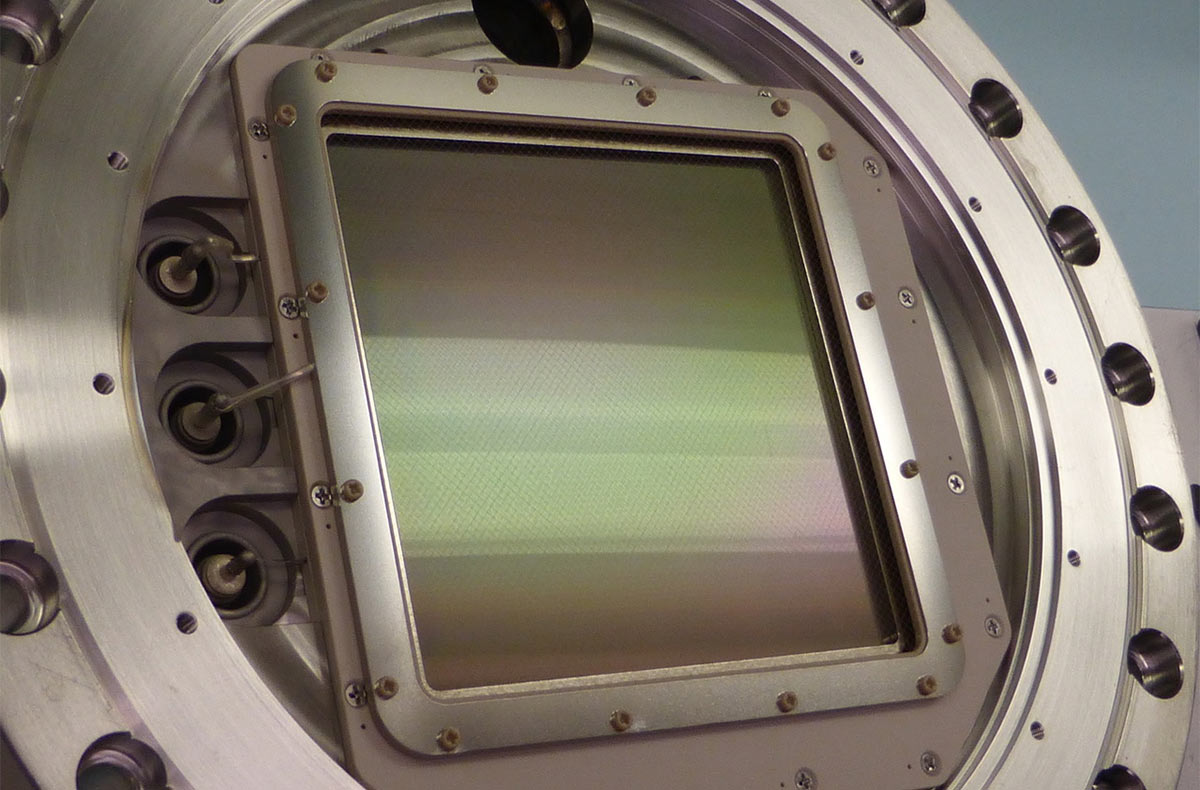
The telescope’s science instruments will take observed light and convert it to science-quality data products that are ready to be analyzed by the astronomical community. As a “super-Hubble,” the greater sensitivities enabled by the larger primary mirror in ultraviolet and optical wavelengths will transform many fields of astrophysics — from the studies of galaxies and black holes to cosmology.
To get the most science return from HWO, advancements in low-noise detectors, high-performance ultraviolet coatings and gratings, multi-object spectrographs, and more will be required. Some of these instruments will be improvements on heritage technologies from Hubble, JWST, and Roman — and others will be entirely new ideas that will fly on a flagship for the first time.
Servicing
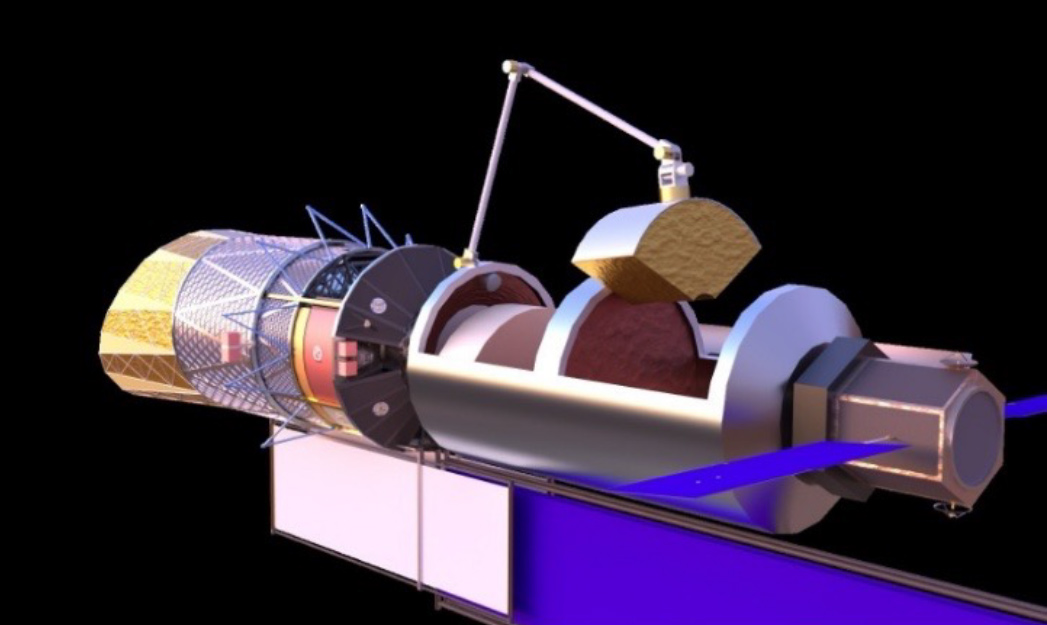
Building on the success of Hubble’s crewed servicing missions, HWO will be designed for robotic servicing at L2. A modular architecture will allow robotic arms to access and replace components without real-time communication with the ground.
Designing HWO with serviceability in mind at the beginning will extend the mission’s lifetime, increase its scientific productivity, and reduce risk by enabling instrument upgrades, consumable replacement and the correction of unforeseen issues after launch. Pre-flight modularity simplifies integration and testing, allows later-stage upgrades, and can shorten time to launch by keeping noncritical, higher-risk technologies off the critical path. To realize this goal, NASA will leverage existing partnerships in the aerospace industry where there have already been significant advancements in robotic servicing, along with lessons learned from the successful Hubble servicing missions.
Emerging Technology
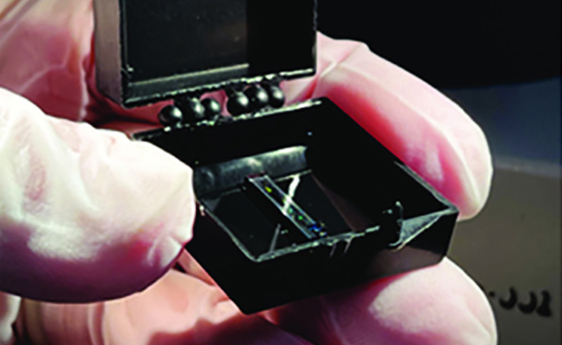
HWO is preparing to take advantage of exciting cutting-edge advancements in emerging fields such as photonics, quantum-limited detectors, optical metasurfaces, and artificial intelligence (AI). While it is challenging to predict what the landscape of these rapidly growing fields will look like over the next decade, the project is investing in these potentially game-changing technologies early to consider them as possibilities as they mature. This includes high-performance onboard computing and cryocoolers, as well as planning for instrument upgrades as part of the observatory’s serviceability.